
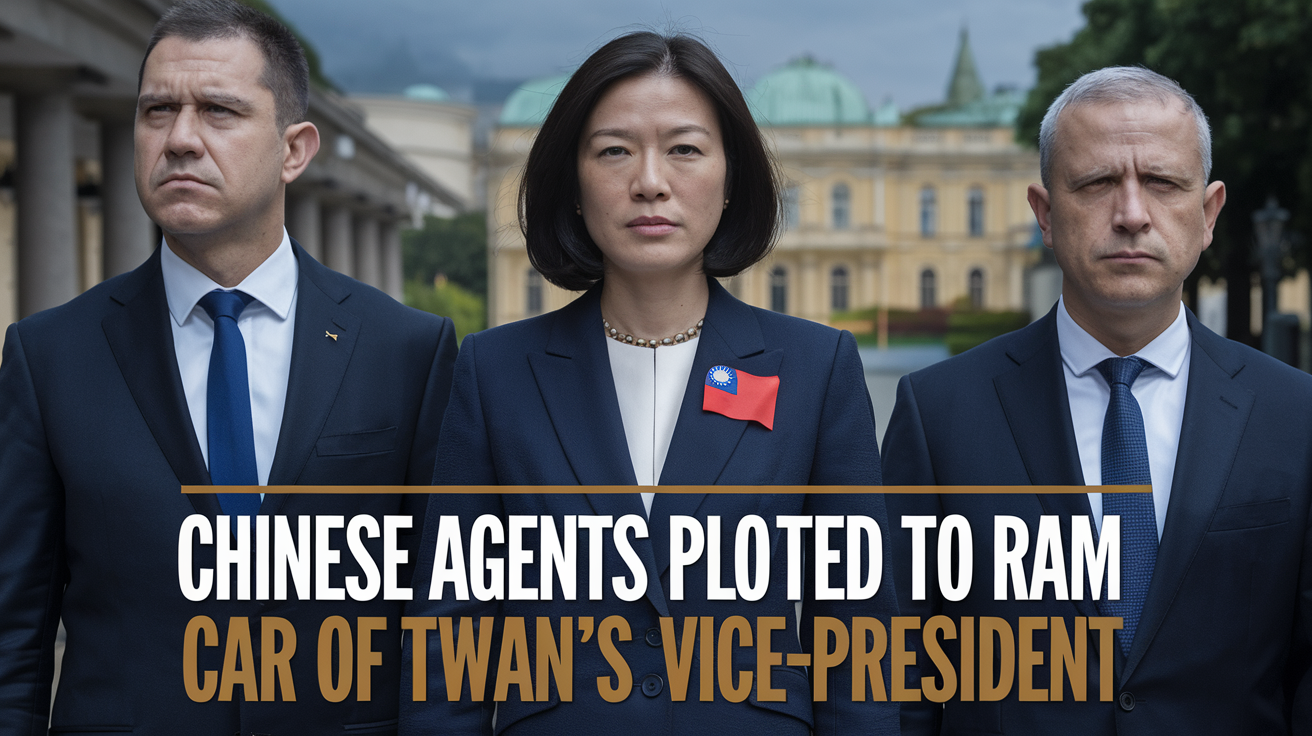

Overview of the Alleged Plot
In March 2024, Taiwan’s now Vice-President Hsiao Bi-khim was targeted in what authorities describe as an orchestrated surveillance and intimidation attempt by Chinese agents in Prague. The motorcade carrying her was followed, surveilled, and nearly struck by a suspicious vehicle. Taiwan’s Mainland Affairs Council (MAC) has officially accused Chinese operatives of plotting to ram the car—raising alarm about China’s expanding use of transnational intimidation against critics abroad.
Why Is This Incident Significant?
- First alleged attack on a top Taiwan official in European territory.
- Occurred in Prague, a city increasingly friendly to Taiwan.
- Signals China’s growing surveillance operations in democratic nations.
Who is Hsiao Bi-khim?
Hsiao Bi-khim, 53, is a prominent Taiwanese diplomat and politician. Born to an American mother and Taiwanese father, she is a member of the ruling Democratic Progressive Party (DPP) and is well-known for her advocacy of Taiwanese sovereignty.
Political Milestones
| Role | Details |
|---|---|
| Vice-President (2024–) | Elected alongside President Lai Ching-te |
| Taiwan Rep. to U.S. | 2020–2023, strengthened bilateral ties |
| Legislative Yuan Member | Multiple terms, active DPP member |
What Happened in Prague?
While visiting Prague in March 2024, Ms. Hsiao’s diplomatic motorcade was followed by a suspicious vehicle. According to Taiwan’s MAC, the vehicle nearly rammed into her car, suggesting an intentional act by alleged Chinese agents.
Fortunately, Czech security teams intervened swiftly and the vice-president completed her visit without physical harm.
“I had a great visit to Prague and thank the Czech authorities for their hospitality and ensuring my safety,” — Hsiao Bi-khim
Taiwan’s Reaction to the Incident
The MAC officially condemned the act, stating it was part of a broader attempt by China to suppress Taiwan’s global presence.
Government Measures:
- Increased diplomatic security in Europe
- Appeals to democratic allies for condemnation
- Investigations into other similar threats
China’s Response
Beijing has not responded directly. Chinese media have accused Taiwan of dramatizing events and attempting to provoke. This aligns with Beijing’s ongoing narrative of “One China” and its refusal to recognize Taiwan’s sovereignty.
Global Political Context
This alleged act is not isolated. China is increasingly being accused of engaging in transnational repression. Similar cases have been reported worldwide.
Examples of Chinese Activities Abroad
| Country | Reported Activity |
|---|---|
| UK | Secret police stations |
| Canada | Election interference, diaspora monitoring |
| Australia | Political donation scandals |
Czech Republic’s Role and Reaction
The Czech Republic has been supportive of Taiwan in recent years. Their security services reportedly acted swiftly to neutralize the threat to Ms. Hsiao. Officials have declined to comment further due to the sensitivity of intelligence operations.
Impact on Taiwan-China Relations
The incident may cause irreparable damage to Taiwan-China diplomacy. Taiwan will likely continue pushing for more visibility in international arenas, while China may intensify its covert efforts to counteract that.
Taiwan-Europe Diplomacy
- New tech trade agreements with Eastern Europe
- Academic exchange programs
- Public support from EU MPs
International Community’s Stance
Experts believe this could trigger a reassessment of how democratic nations treat Taiwanese diplomats. Security protocols are expected to be reviewed and updated.
Expert Commentary
- “This is about freedom of movement in democratic nations.” – Prof. Lin Ya-hui
- “China is testing Western boundaries.” – Tomas Urban, Czech analyst
Summary Table: Key Facts
| Detail | Info |
|---|---|
| Date | March 2024 |
| Location | Prague, Czech Republic |
| Target | Hsiao Bi-khim |
| Alleged Perpetrators | Chinese agents |
| Outcome | No injuries, diplomatic fallout |
Conclusion
The incident involving Chinese agents plotting to ram the car of Taiwan’s vice-president is a troubling example of geopolitical tensions manifesting in aggressive tactics. It highlights the fragile nature of Taiwan’s international diplomacy and the lengths to which Beijing may go to silence opposing voices. The event may prompt renewed global support for Taiwan’s sovereignty and bolster demands for stronger protections for democratic representatives.
Frequently Asked Questions (FAQs)
1. What happened to Hsiao Bi-khim in Prague?
She was reportedly targeted by a suspicious vehicle that nearly collided with her motorcade, believed to be part of a Chinese surveillance plot.
2. Has China responded?
No formal response has been issued. China typically denies such claims while maintaining aggressive posturing toward Taiwan.
3. Why is Prague significant for Taiwan?
The Czech Republic has emerged as one of Taiwan’s most vocal European allies, making it a symbolic target for Beijing.
4. Was anyone injured?
No injuries were reported. Czech security teams acted swiftly to prevent escalation.
5. What’s the global reaction?
While most nations haven’t officially responded, the international security community is taking the incident seriously as part of a growing trend of Chinese interference.
Responses